
Why a small indie game developer put Palestinian liberation before profit
A small indie game developer joined the No Games for Genocide campaign, even though it meant giving a significant chunk of money back to Microsoft.
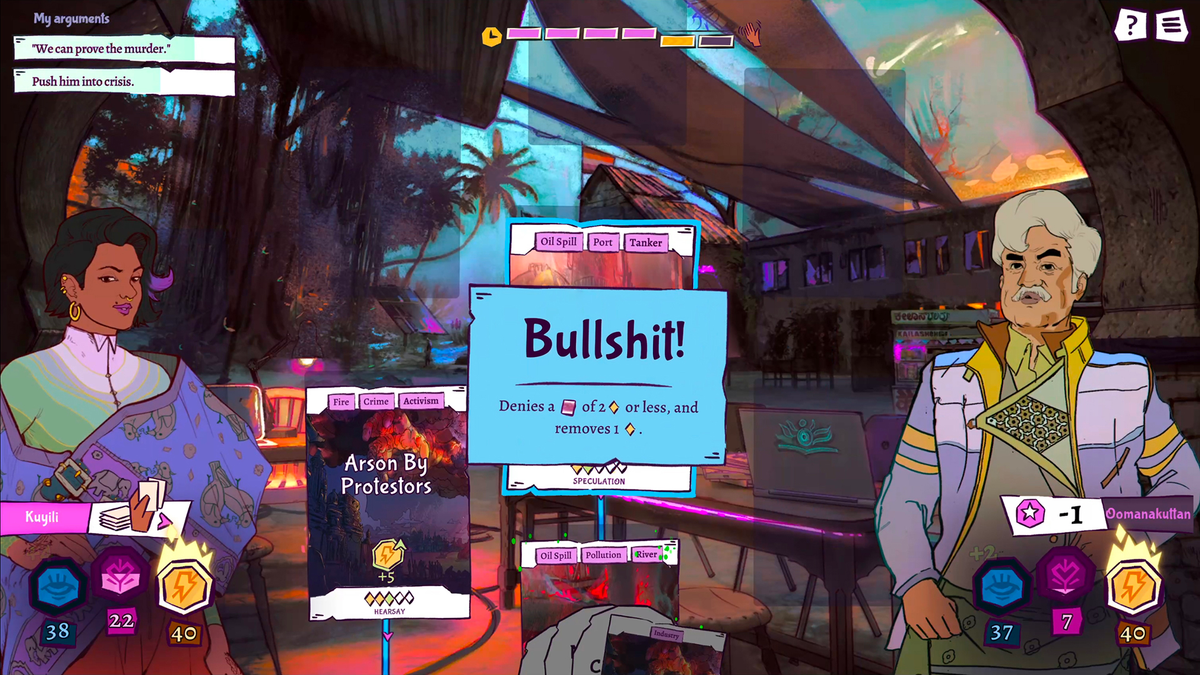
When the Dutch pension fund ABP announced they were going to divest from fossil fuels in October 2021, Joost Vervoort was in a room with activists who had been preparing to take the fund to court. “The euphoria and surprise among the fellow activists was an amazing thing,” said Vervoort, game designer at Speculative Agency and professor of transformative imagination at Utrecht University, the Netherlands. “I was like this has to be in games.”
A happy coincidence, then, that Vervoort had already started working on All Will Rise—a deck-builder game about taking a billionaire to court for the murder of a river—with his team at Speculative Agency. The game has already generated some buzz, securing coverage in many major news outlets, and their Kickstarter campaign that ended on Monday raised over 60 thousand euros with over 1000 backers.
Speculative Agency announced on the 13th of March that they’d be returning money they’d received from Microsoft as part of a developer acceleration programme deal. The decision was made because Microsoft’s Xbox is a priority target for the BDS (Boycott, Divest, and Sanctions) campaign, which describes the tech corporation as “perhaps the most complicit tech company in Israel’s illegal apartheid regime.”
The boycott is part of the wider No Games for Genocide campaign, spearheaded by games industry professionals who care about “the games industry, Palestine, and all people living under the violence of colonialism and imperialism.” History shows us that boycotts are a vital tool in bringing about political change. For example, the movement against Apartheid in South Africa started as a consumer boycott in 1959 and continued until 1993 when the country was irrevocably on the path to democratic elections.
 Jack McGovan
Although the support of Xbox meant a lot to Speculative Agency, their politics prevented them from keeping the money. “I don't think it was a super painful decision in the sense of the moral clarity of it, but of course it’s financially painful,” said Vervoort.
The decision ended up boosting their Kickstarter campaign, and Vervoort was pleasantly surprised by the support they received from games news outlets across the world. He said that their decision helped show people that Speculative Agency had strong values and were willing to put their money where their mouth was, which “supercharged” the game’s intentionality.
It would be a stretch, however, to say that Microsoft was a saintly company until it started providing technology, including AI, to the IDF. When asked why they took the money in the first place, Vervoort said: “It's very hard to make anything with any measure of success, reach, or scale without being complicit in existing systems.”
The genocide was a red line for Speculative Agency because while “there is systemic violence happening everywhere all the time,” the genocide is happening right now, and the boycott could help save lives. “There's a small chance because it's hard to pressure these large companies, but the urgency is different,” he said.
 Jack McGovan
The decision to break their contract with Xbox means that they’ll no longer be able to sell All Will Rise on the console, limiting the potential reach of the game. The hope, however, is that their decision to boycott one of the more consumer-facing sides of Microsoft will encourage people interested in progressive politics to play games elsewhere. “I think that's a bigger impact than people just playing a game that teaches them cool things and that lets them experience an ideological perspective on the world,” he said.
Games have long been connected to militarisation. The mission statement of No Games for Genocide talks about how the game industry has been complicit in normalising the presence of the military through militaristic game content, military recruiters at eSports events, and games being developed as military simulators.
Vervoort, whose research sits at the nexus between climate and gaming, wishes that progressive movements would pay more attention to games as a space for change. He pointed out that video games are the largest form of media globally, eclipsing music and film. “Games are a cultural force. They reinforce identities and values, and reproduce them. They galvanise communities and networks,” he said. “They're a vector for social change in that sense.”
With progressives not really paying attention to games, it leaves the space open to takeover from the far-right. The White House shared a video splicing bombings of Iran together with video game footage, and one of the world’s largest video game streamers, Asmongold, excused the fact that a school full of kids in Iran got bombed. “There's not enough progressives doing stuff in the game space, and especially in the social media ecosystems around games,” he said.
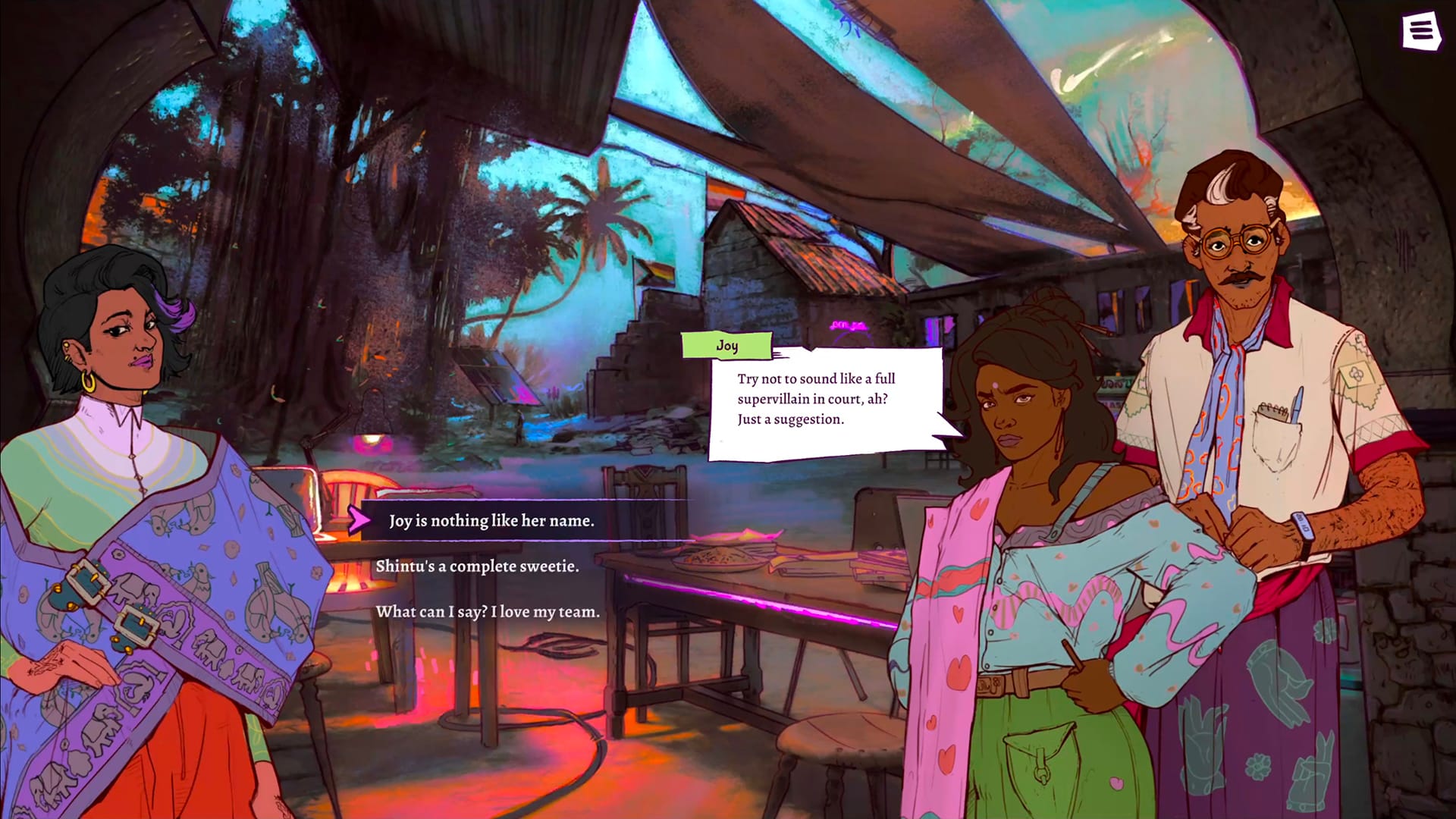
Although all of these issues are very serious, Vervoort highlighted that All Will Rise is actually quite playful. The main character, he said, has a sense of humour that means she’s often landing herself in trouble. “We need to be able to laugh and to play with issues as well as take them very seriously,” he said
Despite having themes centred on climate, accountability, and justice, the game isn’t trying to teach people that the planet is dying. Everyone already knows, Vervoort said, and the people who don’t aren’t going to be convinced by a game like this. “What All Will Rise is really about is getting people excited about playing with the chaos of systems change,” he said. “[The complexity, the drama, the joy]... it has to be subversive, irreverent, funny, weird, and absurd.”



Comments ()