
Do future generations deserve rights?
People born in the future will bear the brunt of the climate crisis, raising questions of how much we should consider their interests in decision making processes.
Written by Jack McGovan / Edited by Libby Langhorn
You only have to take one look in a history book to realise that humanity has made some pretty blundering errors when it comes to deciding who deserves moral consideration. In the last century alone, women received the right to vote for the first time, gay men were allowed to die en masse during the HIV pandemic, and we have closed our eyes to successive mass genocides in the Global South. Our collective past isn’t rosy, despite right-wing attempts to paint it as otherwise.
“There's a strong history that shows that in terms of moral inclusion, we have been consistently wrong,” said John Adenitire, senior lecturer in law at Queen Mary University of London. Even today, he said, we’re still wrong about black people, women, and queer people, to give a few examples. That’s without even mentioning how humanity treats members of other species.
Adenitire believes sentience, the capacity to think and feel, is the metric by which we should care about a being’s rights. As such, he includes non-human animals in his moral circle—a concept to describe who is worthy of moral consideration. While the rights of other species should be considered, that doesn’t mean that human interests can’t win out. Or, the reverse, that another species’ interest is more compelling in a given situation. For example, in building new homes, it might be decided that certain land can’t be built on for biodiversity reasons.
When Adenitire recently read through a book arguing for the expansion of humanity’s moral circle to include future generations, however, it challenged his sentience-based framework. He’d seen value in the argument of the book that we should err on the side of caution when it comes to defining the moral circle, given our, to say the least, problematic history. On that basis, we should collectively worry about future generations—people who are not yet sentient. “I don't think that future generations are bearers of rights, but nevertheless, they are the beneficiaries of responsibilities,” he said.
 Jack McGovan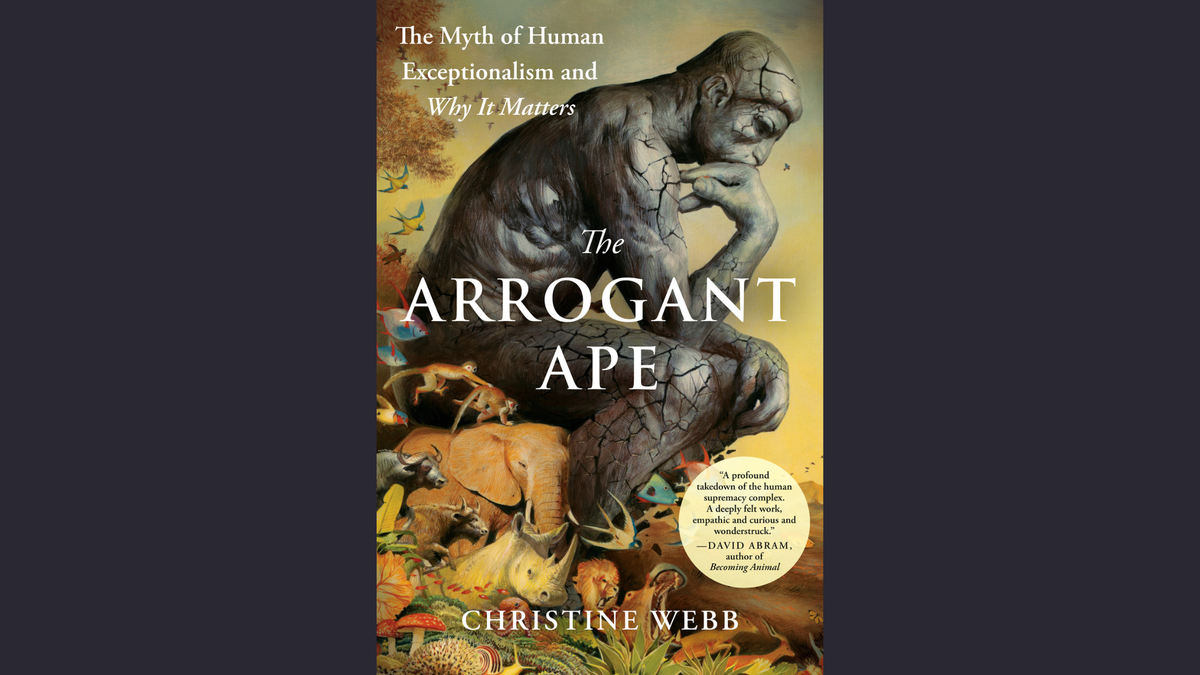
While the climate crisis is already having a massive impact on today’s world, it is future generations who will bear the brunt of it. Some researchers have predicted that warming of two degrees or more, the upper target set out in the 2015 Paris Agreement, could lead to one billion premature deaths of mainly poorer human beings by the end of the century. “Given that catastrophic loss, it is worth something to try to enforce some of these [responsibilities]," he said.
While Adenitire argues that future generations deserve some consideration, others take it a step further. Longtermism is a movement of people who believe that protecting future generations is the strongest imperative we have. They believe that most humans who will ever live have not yet been born, and so investing in things now that protect them is how we can do the most good in the world.
The danger of that rhetoric is that it can be used to justify cruelty today. William MacAskill, an Oxford philosopher who believes in longtermism, wrote a paper in which he argued that we can save more lives for every 100 dollars spent on planetary defence systems versus asteroids than we can by providing mosquito nets to protect people from malaria. A piece in the New Yorker suggests that Elon Musk believes in this ideology, and his union-busting practices at Tesla are a way of lowering labour costs to expedite the transition to electric vehicles. Poor, marginalised people can be sacrificed today for the world of tomorrow.
 Jack McGovan
When it comes to considering future generations, Adenitire isn’t a believer in that kind of rhetoric. He believes it’s important to balance their interests with those who are alive today. Not only that, he thinks there’s actually a lot of overlap between protecting present and future generations. “My argument is actually that once we consider future generations, there are many win-win situations for present and future generations,” he said.
Burning fossil fuels, the leading cause of carbon emissions globally, is responsible for an estimated 5.13 million deaths every year. Similarly, factory farms are a breeding ground for viruses that could become the next COVID-19 pandemic—or worse. The H5N1 strain of bird flu, which researchers fear has pandemic potential, originated on a commercial geese farm in 1996. Cutting out fossil fuels and factory farming therefore offer benefits to both current and future generations.
The takeaway isn’t necessarily that future generations are deserving of rights—I’m sure all of us feel some level of care towards the young members of our families and communities. It’s about recognising the mistakes we’ve made in the past, and how it’s better for all of us to approach moral decision making with a little more humility. Doing so won’t make the world a better place tomorrow, it will make it a better place today.

Comments ()