
The interfaith iftar promoting environmental stewardship
Communities of faith came together in London during Ramadan and Lent to bond over their shared responsibility for the environment.
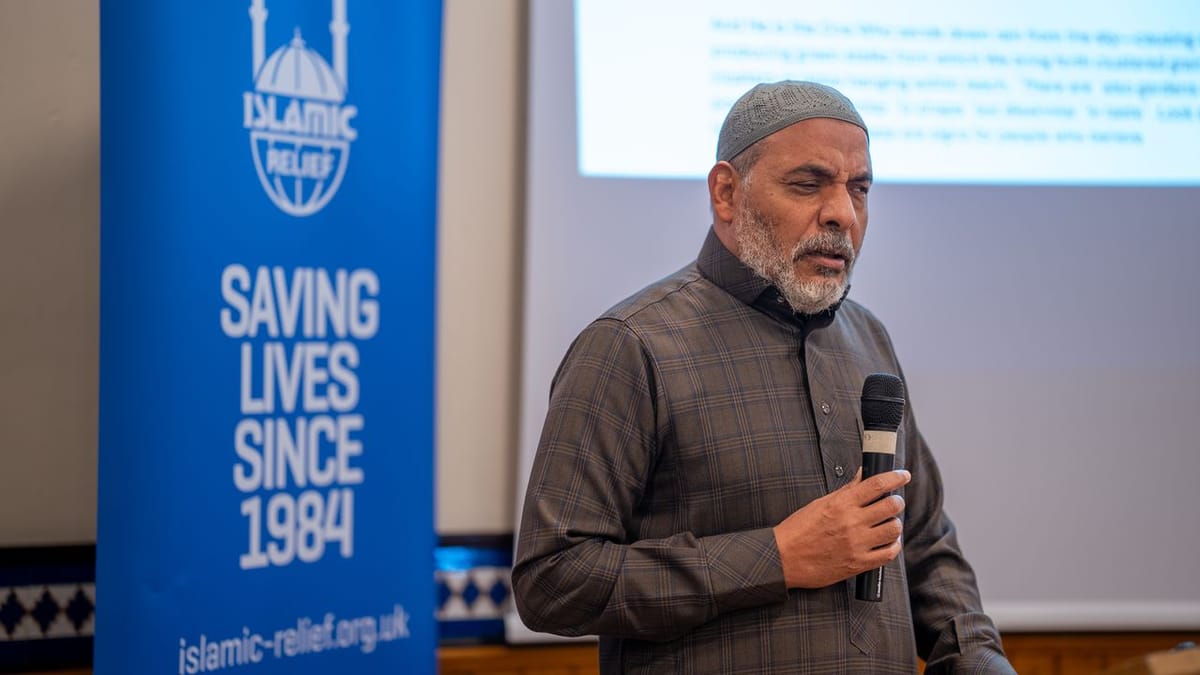
Although a Muslim, a Christian, and a Buddhist meeting in a mosque sounds like the start of a Dad joke, it’s also a true reflection of what happened in Al Manaar Mosque in North West London on March 6th. People from different backgrounds—faith and non-faith—gathered at sunset to break fast at an interfaith iftar as part of charity Islamic Relief’s eco-Ramadan campaign. The idea was to bring different communities together to reflect on shared values of environmental stewardship, compassion, and responsibility.
“[Ramadan] is typically a period where we're meant to show self-discipline, self-restraint, and be more mindful about the behaviours that we're exhibiting and the food that we're eating,” said Suraiya Rahman, campaigns & public affairs coordinator at Islamic Relief. “But, unfortunately, it ends up being a period where we’re often overindulging, eating way more food, and wasting a lot more than we would in a regular period.”
Food waste increases by around 60 percent during Ramadan in the Middle East, and food waste is responsible for around 10 percent of global emissions. Rahman organised the eco-Ramadan campaign to focus on three pillars to encourage Muslim communities to become more environmentally conscious: avoiding food waste, avoiding meat, and minimising the volume of single-use plastics.
Part of the experience that Rahman particularly enjoyed was speaking with people outside of the Muslim faith who valued seeing this kind of environmental leadership. “They were also speaking about how in the times that we're living in with division and increasing polarisation, it's really nice and special to have these shared spaces together… where we're coming together to deliberately build that connection, strength, and solidarity,” she said.
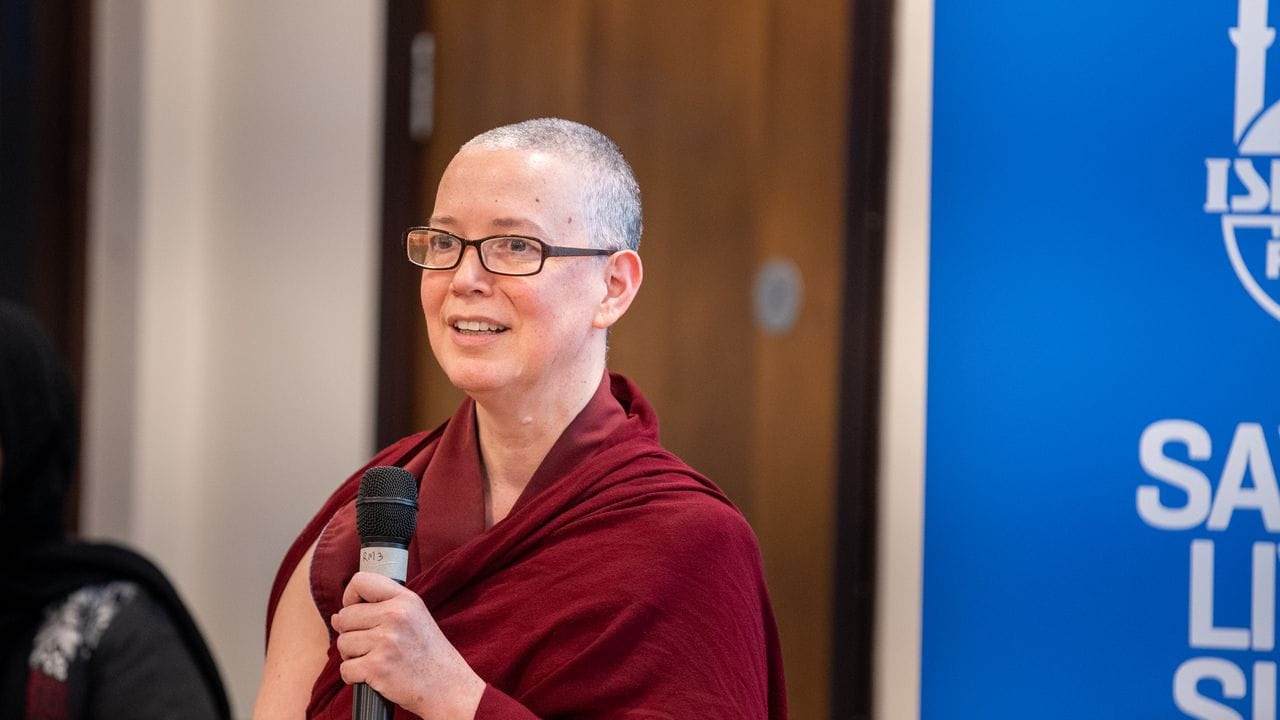
Interfaith iftars are something that have been used in other contexts to bring people from different backgrounds together to meet common goals. In March, London mayor Sadiq Khan spoke at an open air iftar in Trafalgar Square that was intended to celebrate diversity in the city. Interfaith iftars are also common in countries like Indonesia as a way to build bonds between different groups in a multi-faith society.
There’s an intrinsic relationship between Islam and the environment, Rahman said, with there being around 200-300 references to environmental stewardship in the Qur’an alone. She believes, however, that you don’t need to be a person of faith in order to find a connection to the more-than-human world. One common thread between the people at the iftar was this feeling that they had collective responsibility over the Earth.
“No matter how you view the environment, how it was created, or how it has been given to us... I think this idea that we have this collective responsibility is really, really important,” she said.
Many Muslim majority countries, located in the Global South, are some of the most impacted by the climate crisis. Despite not having emitted much historically, they bear the brunt of the impacts of rising global temperatures. The Pakistan floods of 2022, for example, saw children stunted as families were no longer able to afford food or medicine after widespread devastation.
At the same time, only a quarter of British Muslims think that climate change is a priority for their community. Appealing to moral values around climate justice is something that Rahman has found can motivate Muslims in the UK. During the Pakistan floods, Islamic Relief noticed an uptick in interest in their work. “We were able to make the connection between, you know, humanitarian disasters and the fact that this was a climate-induced disaster,” she said.
 Jack McGovan
All of this coalesces around an important point: if Islam and other religions teach environmental stewardship, then why are we failing to prevent the climate crisis? Rahman believes that it has to do with how disconnected we are in the Global North from the things we consume.
“Especially in the Global North, or where we are in the UK, I think there's definitely a sense that we have resources in abundance,” she said. “We’re maybe not thinking about it in terms of waste, we're maybe thinking that we just have an endless supply of it because we've always had it and not been without it.”
It’s her view that we need to become more connected with the products we’re consuming and putting in our bodies, and only through that process can we reconnect with our role as environmental stewards. Taking more responsibility, looking at how our behaviours are connected to what’s happening in the Global South, and breaking bread together are all important aspects of that. Whether you find responsibility in your faith, your love for your children, or simply because it’s the right thing to do, we need that collectivism to overcome this global challenge.

Comments ()