
Choosing consumption over connection with nature is dooming us
Jack Moody’s The King of Everything shows us the dark underbelly of modern life, but also points to how we might survive it.
Written by Libby Langhorn / Edited by Jack McGovan
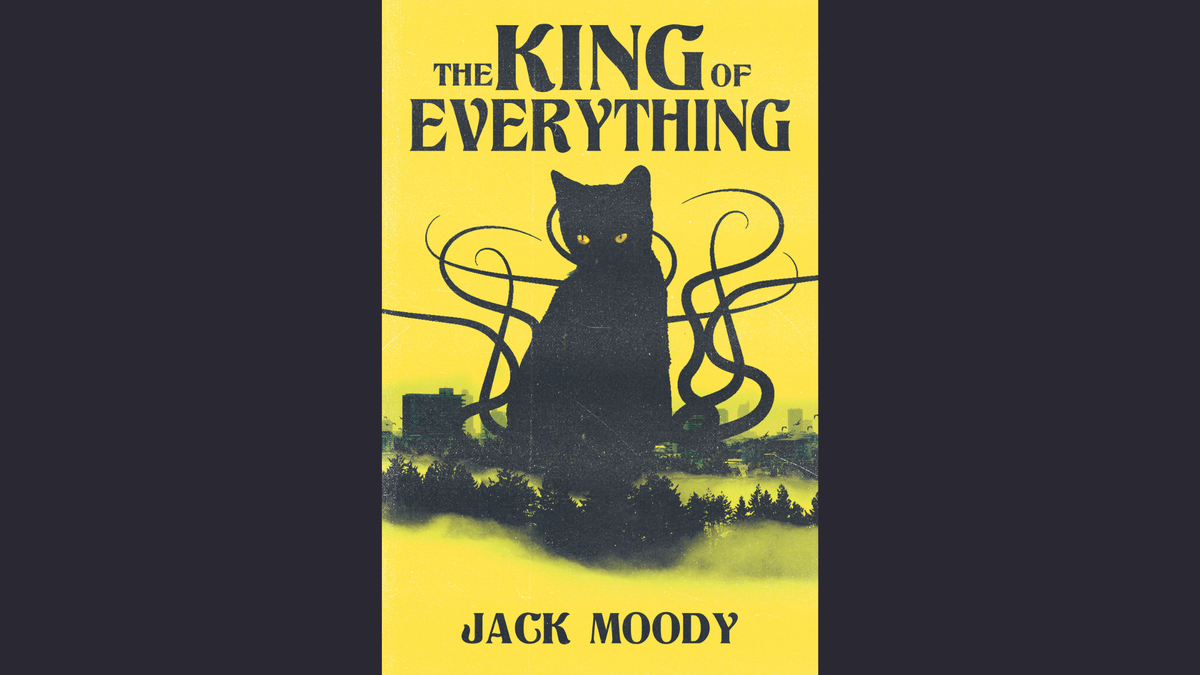
At first glance, Jack Moody’s The King of Everything offers up an introvert’s paradise. The unnamed protagonist lives in a bubble of magical consumerism where he is the last human on Earth, alone in an unnamed city. The electricity miraculously still works, he has filet mignon on demand, and he spends endless afternoons in the cinema where he is the only audience member; everything tailored to his desires. When Eldritch horrors appear at night, however, it soon becomes clear that this tale depicts the gnawing loneliness of an existence defined by consumption.
As the last living human, the unnamed protagonist wanders through this static world, distracting himself from the disturbing implications of his situation with a performance of human life. However, when he is no longer able to suppress his horror and rage, he realises that his life cannot continue as it has been. Desperate to escape, he flees into the natural world where he is forced to experience the pain of truly living, all while in the presence of a strange entity that also calls the woods home.
Moody’s protagonist exists in an environment where every sensorial, bodily, and intellectual wish can be fulfilled, but that is also devoid of Other People. He lives without obligation, without dependency, without the extraction of emotional and physical effort demanded by living in the human world. But there is a dark inverse to this supposed idyll: a life of yawning emptiness, without community, care, or reciprocity.
The book demonstrates this when nights in the unnamed city are stalked by terrifying apparitions who wreak death and destruction upon each living being they encounter, their motivations too malevolent and frightening to be divined. Through these monsters, Moody shows us that mindless consumption cannot distract us forever from the impending catastrophes around us.
 Jack McGovan
The King of Everything echoes the pervasive nature of the internet which is becoming increasingly inescapable—a place similarly lonely and devoid of human interaction. Just as for this man in a post-apocalyptic world, the possibility for consumption online is infinite. I have access to an endless catwalk of clothes of every colour and style, food from any cuisine, almost every book and film and song ever produced, and all of this without ever having to encounter another person.
The impacts of this consumption without end on our protagonist are also familiar to us. While living in this preserved city he is emotionally blunted and lacks introspection. His days are strung together vignettes defined by snapshots of eating, obtaining, and consuming. It is only his connection to the animals he builds bonds with, and his eventual departure into the wilderness, that force him to confront what it means to be alive. Moody’s story is instructive and gives us something to take into our own lives: we must look beyond what is human, even if it scares us, to recognise that our survival means reestablishing our connection to nature.
What is truly frightening about The King of Everything is not the otherworldly beings who come creeping out in the night, but rather the horrific lengths humankind has gone to in order to separate itself from nature and the psychological and emotional cost of maintaining this divide. Only by confronting this rift may we—and the protagonist—survive.
Comments ()