
Santa has no place in a better future
There’s more than enough magic in the world that we don’t have to lie to children and prime them for excessive consumption.
Written by Jack McGovan / Edited by Libby Langhorn
Eight of my friends who, for different reasons, didn’t make it home for the holidays gathered in my kitchen on Christmas day. They crammed themselves around my table, suitable for six at best, and gorged themselves on the fruits of my two-day labour. It was the first time I’d cooked Christmas dinner for anybody, and it was a massively rewarding experience; the warmth of the event was encapsulated by the condensation clouding the icy window.
Although the food was somewhat traditional, the overall experience differed from the broader Western holiday in that none of us bought presents for one another. That decision didn’t stem from a lack of love, but rather the recognition that our shared presence sufficed as a demonstration of adoration. We’re not stingy, I promise.
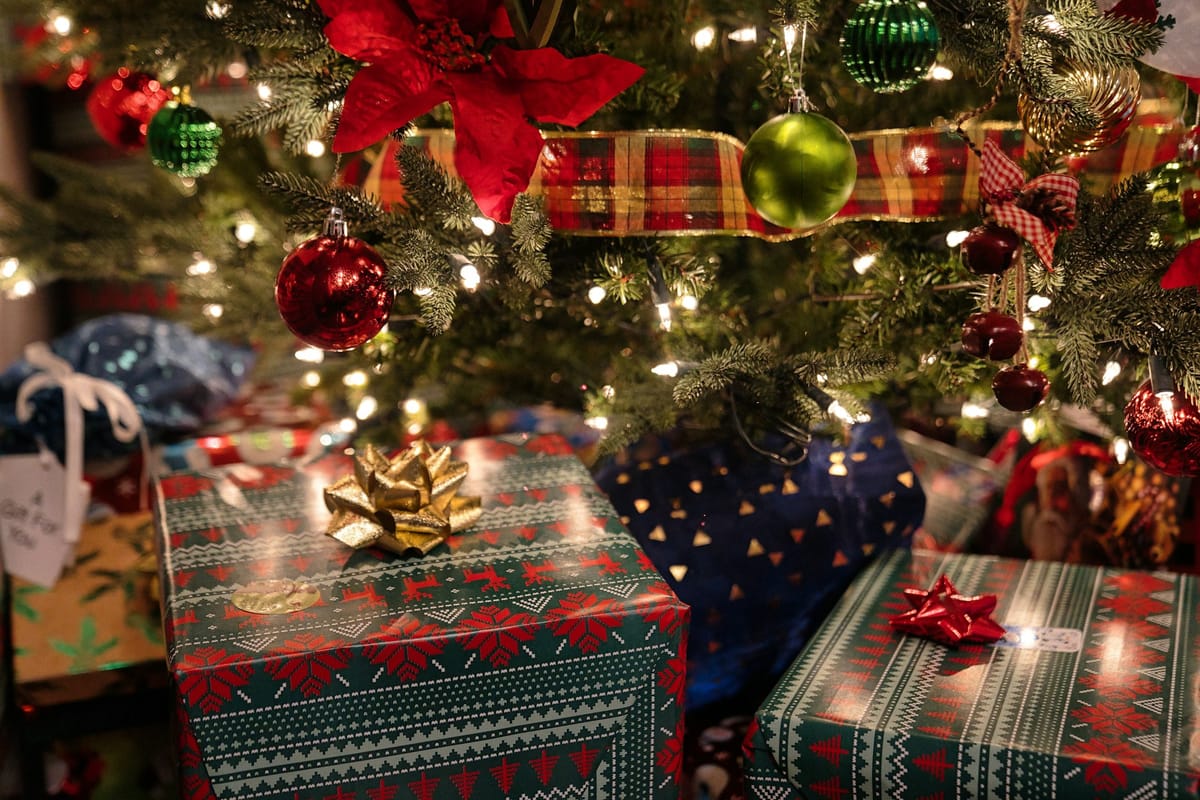
The true spirit of Christmas should be about bringing community together and spending time with loved ones, but it has instead been turned into a celebration of mass consumption. In the UK, around 30% more waste is produced during the Christmas period. We buy untold volumes of presents, cards, and decorations for the people we love when it is exactly that excessive consumption which endangers them. The overconsumption of resources is decimating the natural world and warming the planet.
Part of that consumption is this elaborate lie we tell children about Santa. We tell children that if they’re good they will be rewarded, yet in this scenario good is synonymous with obedient. Not only is this problematic as it associates obedience with good moral standing, it also implies that to have more gifts is to be more good as the richest parents will be able to afford the largest volume of presents. To be wealthier is to be more moral.
 Jack McGovan
It would be naive to think that this formative experience for most children in the West doesn’t affect how they view the world or their parents. A survey of 1200 children found that 30 percent trusted their parents less after they found out about the Santa lie. Social psychologist Kathy McKay, who co-authored a paper in The Lancet Psychiatry on lying to children, told The Independent that lying about Santa is morally suspect and that the whole charade has likely more to do with adults wanting to relive their childhood than actually providing anything of value to children.
The modern world judges adults for actually enjoying their lives, instead promoting the idea that the purpose of life is all about suffering and the grind. It’s no wonder that people would then seek to relive their childhood, to return to a time where they actually could pursue their interests without societal pressures to do otherwise. That we choose such a tepid lie to impress children, however, is depressing.
Implying that the only route to wonder in this world is through an old man who breaks and enters to leave pyjama sets under a tree is achingly sad, and it shows how sick our society is. Is there no awe to be found in the fact that the atoms that make up our body were formed in stars billions of years ago? What is magic if not animals sensing the world in a way that is completely alien to us, that dolphins use sound as a way of comprehending their 3D environment or that elephants can sniff out water sources from miles away? Even the average fantasy book will have something infinitely more compelling than Santa.
The Santa lie is a coping mechanism passed on by adults to their children to deal with the dissatisfaction of modern life, but we all deserve better. We should stop being so self-deprecating about the world we live in, and instead recognise that there is so much out there to give our lives a sense of meaning and wonder than an imaginary man who gives out presents. To stop lying to children, however, we’ll first have to stop lying to ourselves about the state of the world and what needs to be done to fix it.
Comments ()