
What a fence in Berlin tells us about border politics
How a fence built to, allegedly, deal with crime and drug problems is connected to border politics and a long history of social exclusion.
Written by Jack McGovan / Edited by Libby Langhorn
Berlin is a city famous for its nightlife. As the Sun sets and stars sparkle in the sky, unseen through masses of grey clouds, people gather in bars, clubs, and, rain permitting, even the parks during the summer months. While the bohemian nightlife attracts many people, others fall into the darker underbelly of the city, particularly when it comes to the sale, distribution, and consumption of illicit substances.
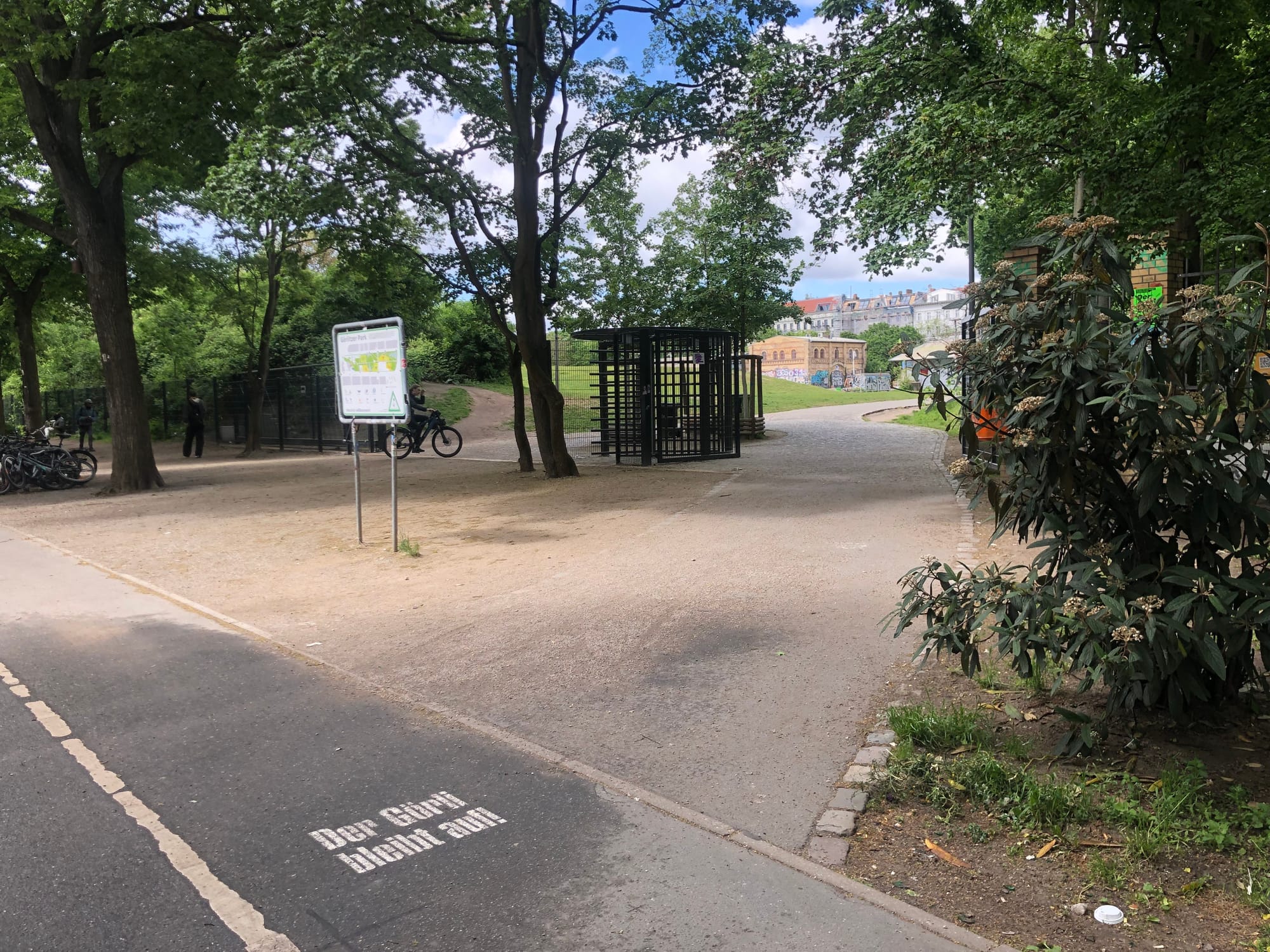
Görlitzer Park, a famous hotspot of drug taking and selling, has recently been mired in controversy. The local government decided to build a fence around the park, inspired perhaps by President Trump’s border construction, and since March 1st visitors have been unable to enter after 10pm. The Berlin Senate allocated up to 800,000 euros for security, and the chosen company—SWU Schutz & Sicherheitsmanagement GmbH—was found to be following accounts on Instagram that posted Nazi imagery like swastikas.
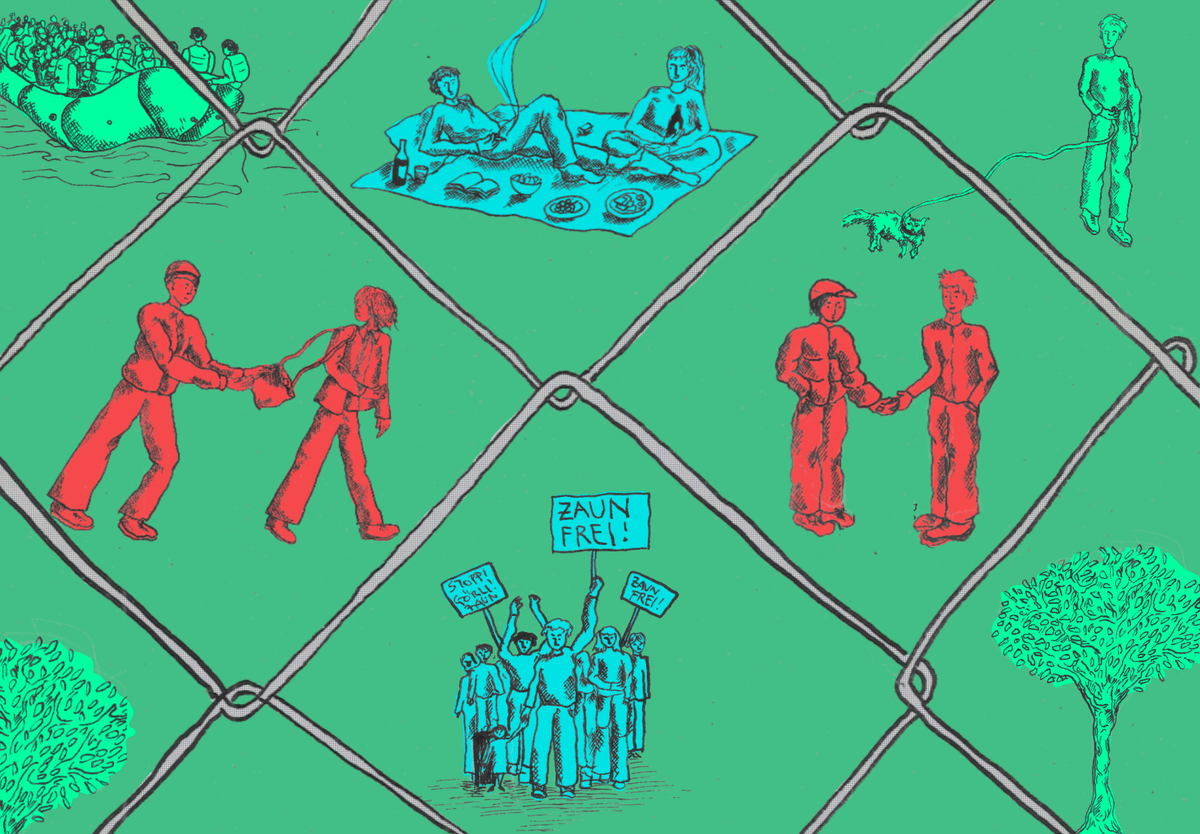
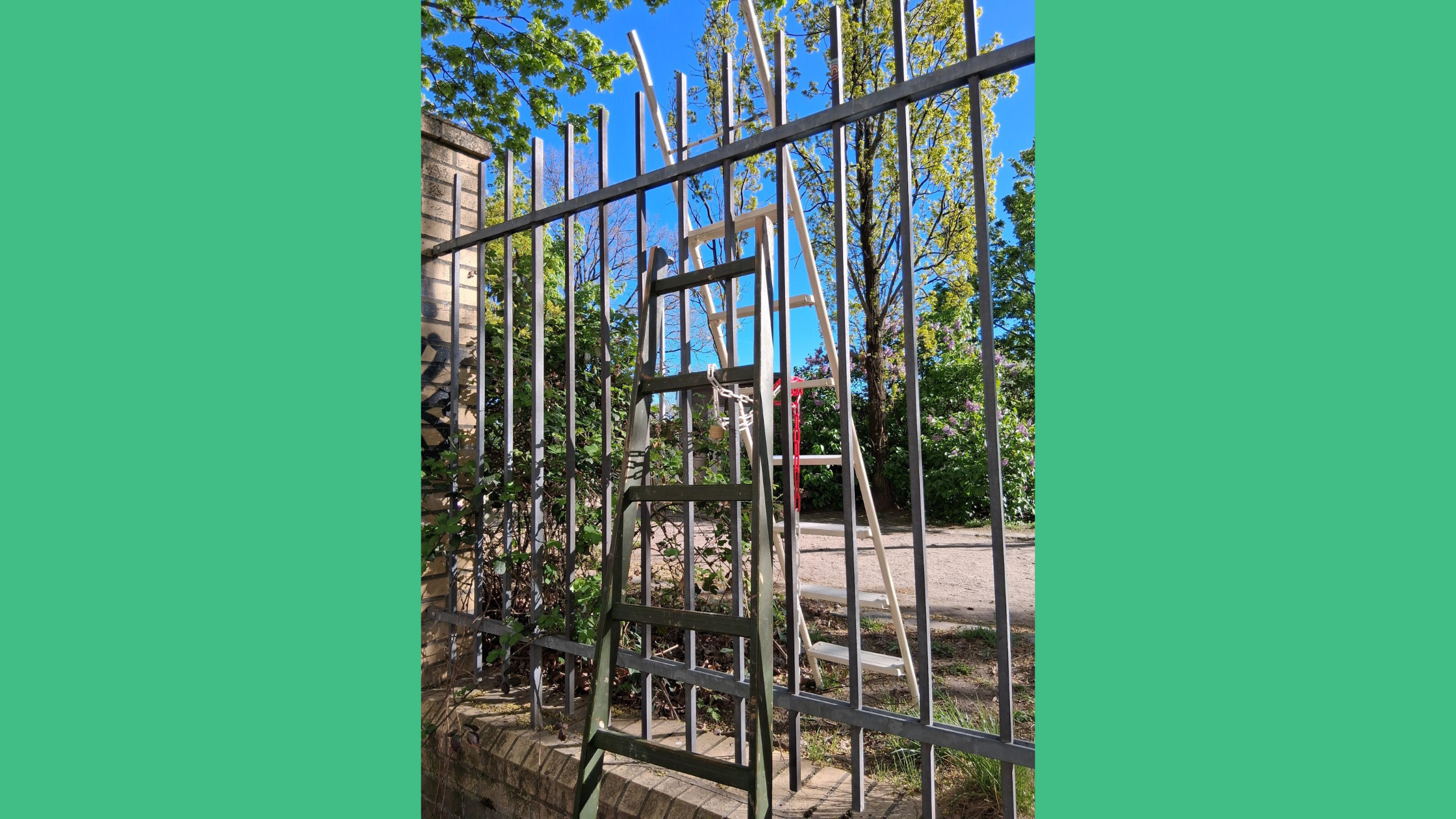
Local residents aren’t particularly pleased with the fence, and not because it offends their aesthetic sensibilities. Alongside multiple protests, people have come up with creative solutions to oppose the new construction like handing out copies of the master key to the gates, using ladders to climb over the fence, and putting glue into the locks. “This entire debate is completely detached from facts, and it’s more about pushing a political agenda,” said David Kiefer, activist at Görli zaunfrei! (Görli fence free!).
While the fence has an immediate local context and consequences, it’s rooted in a politics that is active at a much broader scale. Many of the people selling drugs in the park have migrated from Africa, and they’re often unable to work, either because their residence permit doesn’t allow them to or they face discrimination in hiring processes. With no legal means of receiving an income, they’re forced into illegal markets.
“It's important to understand that what is happening in Görlitzer Park is not local—it's the outcome of European border policy,” said Amal Abbass, co-founder of the tubman.network, an organisation that helps African migrants in Germany. “Europe produces precarity and then criminalises the way people survive it. You cannot disconnect what happens in this park from what happens at Europe's border.”
Social solutions for social problems
Groups of men typically congregate around the entrances to Görli and ask passersby whether they wanted to buy drugs. Even local residents, who walk the same route for months and years on end, could still be asked on an almost daily basis. Kiefer said, however, that it’s the people with substance abuse issues that are having the largest impact: they’re often breaking into people’s apartments, cellars, and cars to steal things, or taking drugs in stairwells.
A few years ago, Kiefer and others wrote an open letter to the government asking them to do something about the problem. What they didn’t ask for, however, is a fence. Instead, they want sustainable solutions that actually deal with the root causes of the problems in the park, rather than simply displacing the people who gather there. For example, they want housing for the homeless people and places for safe drug consumption. “We want social solutions for social problems,” said Kiefer.
All that closing the park at night has achieved is pushing the people who would have usually hung out there, and the associated problems, further into the surrounding residential areas. That’s the impression of Juri Schaffranek, a street social worker at Gangway who has worked directly with people in and around Görli. “Fences are not a remedy for solving social problems,” he said.
Rather than spending almost 1.7 million euros on building a fence and contracting a security firm, that money could have instead been used to actually address the core problems the people in Görli are facing. Schaffranek suggested more social workers are needed, alongside safe spaces in the park for those with substance dependencies. Part of that would include providing small and monitored amounts of the illicit substances in question. “Then they’ll stay in the safe place rather than going back out onto the streets [to get their next fix],” he said.
Problematic narratives
Everyone interviewed for this piece said that the decision to build the fence is at least in part motivated by racism. “We do find it very important to commit to painting a more just and balanced view of African men in extremely difficult circumstances, because a lot of this commotion around Görlitzer Park obviously relates to African men,” said Abbass.
Through the tubman.network, Abbass works with many of the men who gather in the park to help them with the “difficult legal, psychological, [and] financial barriers that they are facing” in Germany. While she said that yes, some people do have drug problems, there are systemic reasons for that. “It has to be recognised how these addiction issues are a result of the structural inequality and the amount of trauma that individuals have gone through,” said Abbass.
There’s also a question of how the crime statistics are framed: only every one in ten offences in the area actually occurred in the park itself before the fence. Similarly, only a quarter of the crimes recorded happened during the night, and almost half of them were from the police stopping and searching people. Schaffranek explained that many Africans who migrate will have a permit to live elsewhere in the country, and they’ll come to Berlin even though they’re not allowed—mainly because there’s an established, familiar community here. “Then when they’re caught by the police, this counts towards the criminal statistics,” he said.
Kiefer has also grown frustrated with the media narratives that depict the park as an irredeemable centre of crime. The park, he said, is used by all kinds of people to do sports, meet friends, and go on walks. “It can also be a really beautiful park, especially in summer when everything is green,” he said.
A politics rooted in racism and colonialism
The reason that some of the people gathering in Görli are there in the first place is because of colonialism, which has directly contributed to economic and social instability in the origin countries of many of these migrants. The fence reflects the broader denial of access to what should be commonly held resources. “It's part of these post-colonial economic relations that we have,” said Céline Barry, board member at Migrationsrat (Migration Council). “That we have the wealth here is part of the impoverishment of classes in African countries.”
Migrants from Africa often have to take a perilous journey across the sea to make it to the EU in the first place, and member states have been accused by human rights groups of withholding assistance from vessels in distress and materially supporting violence at the borders of North Africa. Those who make it are then met with physical and social barriers on the other side; a Russian doll of exclusion. “There would be no Europe without Africa or without colonialism and imperialism,” said Barry.
 Jack McGovan
Narratives about immigrants centre on how they’re here to steal things from us—our possessions, jobs, and land—yet it is precisely the other way around. Europe has stolen wealth from other places to enrich itself and continues to do so. Rather than reckon with that and attempt to make amends, we instead choose to blame the victims of our actions for the precarity we’ve put them in.
Aside from dealing with the substance abuse in the park through a public health approach, other solutions are needed too. Abbass talked about how funding and supporting organisations like tubman.network, which already have inroads to the communities in question, is vital. “With the city taking away funding to organisations like ours, obviously the situation will only get worse,” she said.
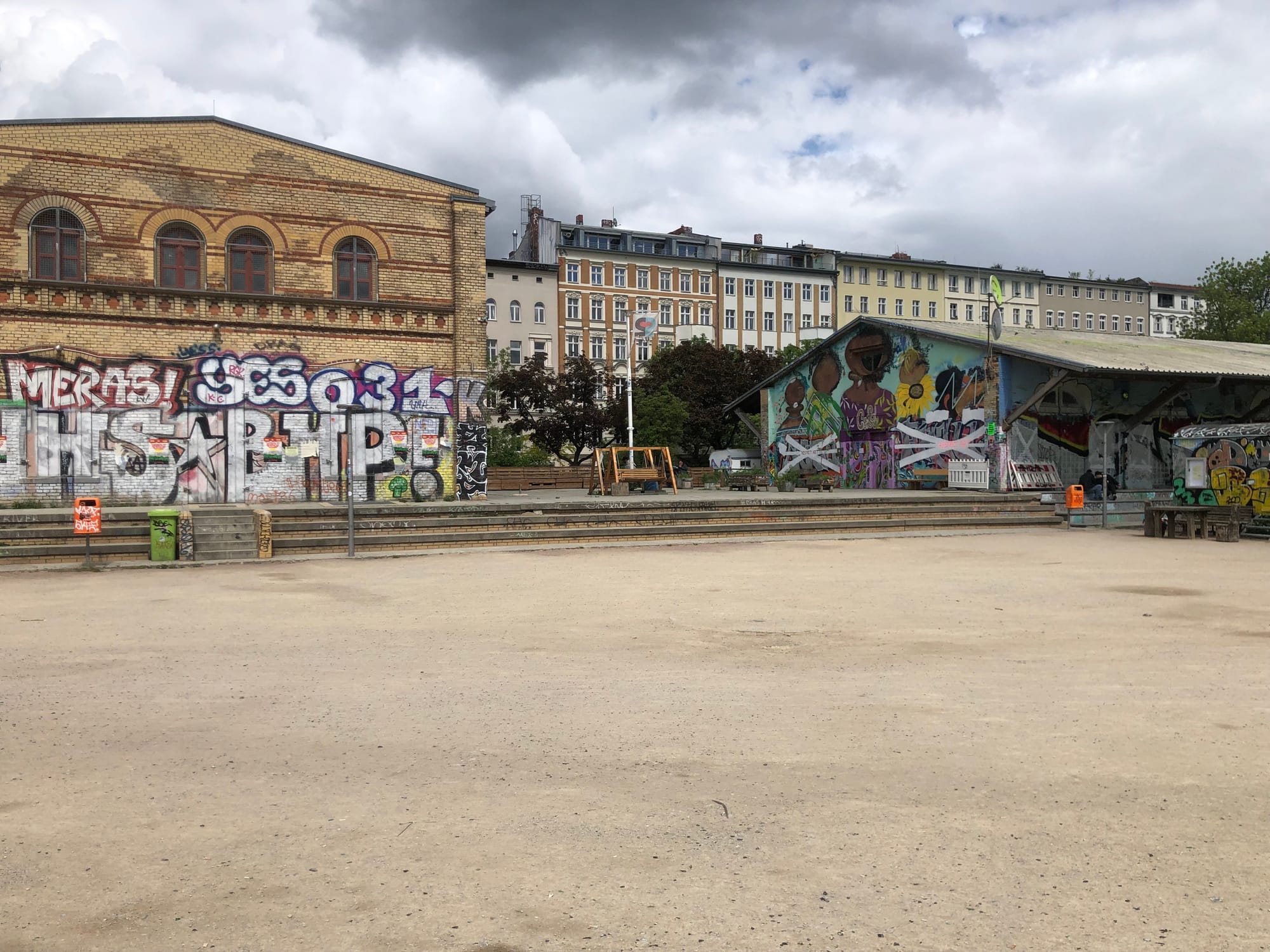
There was a community vision, she said, that perhaps one of the empty buildings in the park could be given to the African men who gather there. Providing them with a space of their own would be a solution that would elevate everybody. “People in the Görlitzer Park are not a problem to be removed,” she said. “They are part of the city that has been neglected.”
Beyond the local context
The fence around Görli is one link in a chain of exclusion and separation. As a society, we’re being increasingly siloed into separate communities, funding for third spaces has been decimated, and everything we might need can be found through a smartphone in our hand away from human interaction. Lines are being drawn between all of us, and we’re being pitted against one another.
In the same way that Görli can’t be separated from what’s happening at the EU’s borders, what’s happening in the park can’t be detached from the other consequences of the same politics. For example, masses gathered weeks ago in the park to protest against the potential implementation of AI-powered surveillance measures. “It feels a bit like Görlitzer Park is a laboratory for testing law and order politics,” said Kiefer.
At a time where fascism is on the rise globally, wars are destabilising our economies, and the climate crisis is already wreaking havoc around the world, we should be coming together; building bridges rather than barriers. Resisting the fence at Görli—or an equivalent in other areas of the globe—is just one small part of a wider struggle for a world order that favours treating human beings with dignity and respect.
Comments ()